Morocco Travel Documents: Complete Checklist for 2026
Planning a trip to Morocco in 2026? Having the right paperwork ready before you fly makes arrival smoother and helps you avoid last-minute surprises. This practical checklist covers the essential Morocco travel documents most visitors should prepare, from a valid passport to visa evidence, travel insurance and proof of onward travel.
This guide is for general travel planning, not legal advice. Entry requirements can change and depend on your nationality, passport type, residence status and purpose of travel. Always confirm the current rules with the Moroccan embassy or consulate responsible for your place of residence before booking non-refundable travel.
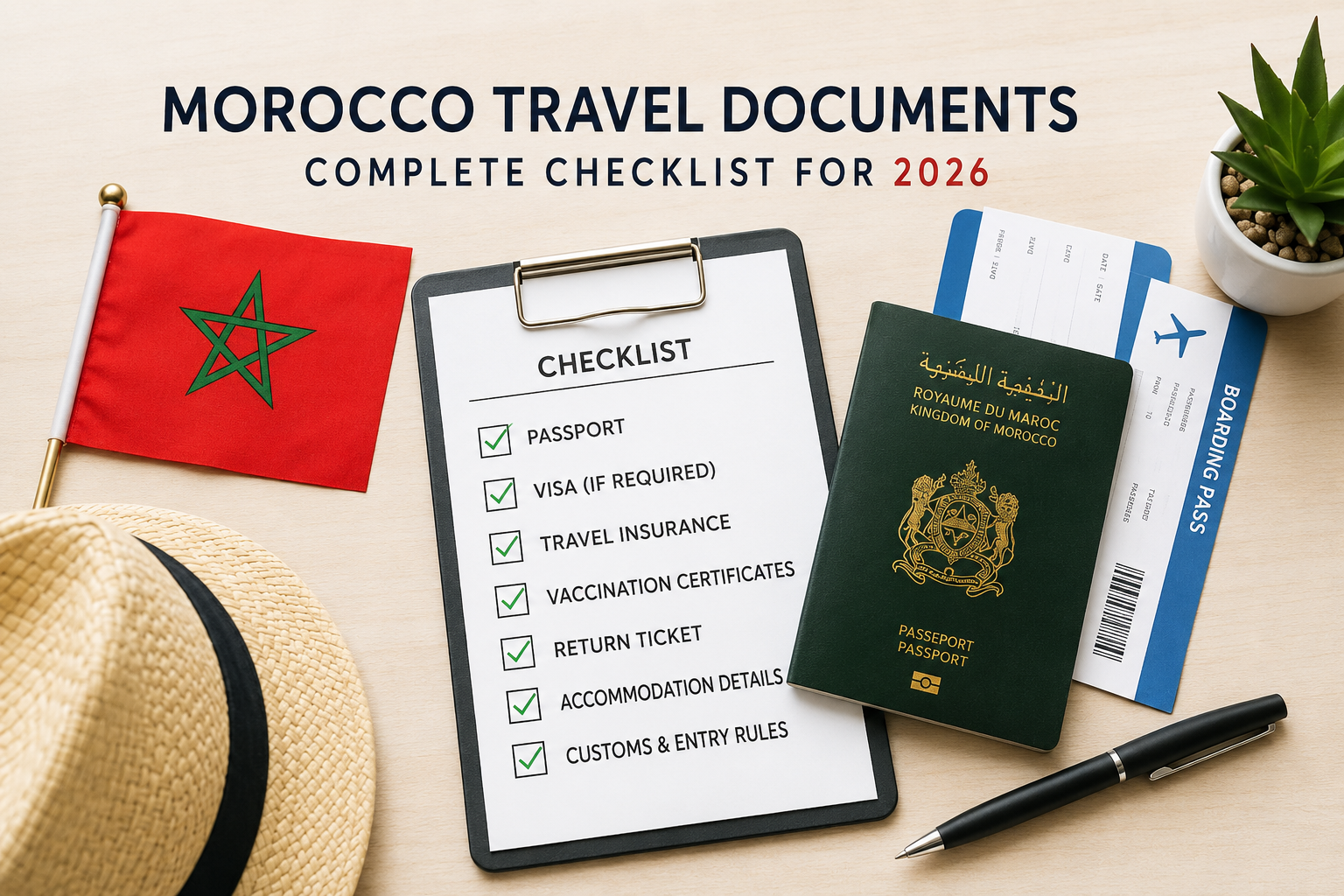
Morocco travel documents checklist
- A valid passport or another travel document accepted by Morocco
- A Moroccan visa or eVisa, if one is required for your nationality and trip
- Proof of onward or return travel
- Accommodation details, such as hotel confirmations or a host address
- Evidence that you can fund your stay, if requested at the border
- Travel insurance documents
- Supporting documents for children, business travel, study or a long stay
1. Check your passport before you book
Every foreign visitor needs a passport or another valid travel document recognised by Morocco. Check that it is in good condition, matches the name on your flight booking and will remain valid for the period required by your airline and the Moroccan authorities. Requirements can differ by nationality, so do not rely on a rule you saw for another traveller.
Make two copies of the passport information page: keep one with your luggage and save a secure digital copy separately. If your passport has been damaged, is close to expiry or has inconsistent personal details, resolve that before applying for a visa or checking in for your flight.
2. Find out whether you need a visa for Morocco
Visa requirements are determined by nationality and the reason for travel. Some visitors may enter without applying for a visa in advance, while others need a visa or an eVisa. The official Moroccan consular service explains that a visa is an entry and residence authorisation issued for a limited period; a visa does not guarantee admission at the border.
For many visitor itineraries, the relevant category is a short-validity visa. Moroccan consular guidance states that each stay under this type of visa can range from one to 90 days. If you plan a longer stay, study, work, join family or make repeated trips, contact the consulate before you travel because a different process may apply.
Start the visa check early. Use the official Moroccan consular guidance on visa types and confirm the documents, timing, fees and application channel with the embassy or consulate serving your country.
3. Prepare proof of your trip
Border officials can ask visitors to show evidence that the trip is genuine and that they can leave Morocco when their permitted stay ends. Keep these items easy to access on your phone and, where possible, in print:
- A return or onward ticket
- Hotel bookings, a tour itinerary or the address and contact details of your host
- A clear itinerary with your arrival and departure dates
- Evidence of funds for accommodation, food and local transport
For visa applications, the embassy may ask for extra supporting documents. Give only accurate, consistent information: names, dates, accommodation and flight details should match across your application and bookings.
4. Carry travel insurance details
Travel insurance is a sensible safeguard for medical care, cancellations, lost baggage and disruptions. It may also be part of the documents requested from visa applicants or visitors at the border. The Moroccan visa application information notes that travellers should be able to present documents supporting their stay, return journey, means of subsistence and insurance.
Choose a policy that covers Morocco for your complete travel dates and download the certificate before departure. Check the emergency number, the medical cover limit and any exclusions for activities you plan to do, such as hiking in the Atlas Mountains, surfing or driving.
5. Documents for children and family travel
Each child should have their own valid passport and any required visa. Parents or guardians should carry documents showing their relationship to the child, especially where surnames differ. If a minor is travelling with one parent, another adult or alone, check whether written consent, a birth certificate or other authorisation is required by the departing country, airline or Moroccan authorities.
6. Driving, health and practical records
If you intend to rent a car, bring your driving licence and check with the rental company whether an International Driving Permit is recommended or required for your licence. Keep prescription medicines in their original packaging and carry a copy of the prescription or a doctor’s letter when appropriate. These items are not substitutes for entry documents, but they can make your journey easier.
Final pre-flight check
- Passport valid and undamaged
- Visa or eVisa confirmed, if applicable
- Return or onward ticket saved offline
- Accommodation and itinerary available
- Insurance certificate downloaded
- Copies of important documents stored securely
- Current rules reconfirmed with the official Moroccan consular service
With your Morocco travel documents organised in advance, you can focus on planning the enjoyable part: your route, riad stays, food experiences and time in Morocco’s cities, coast and mountains. For more preparation ideas, read our guide to things to do in Chefchaouen and our three-day Marrakesh itinerary.