What Is the Best Time of Year to Visit Morocco? A Complete Seasonal Guide
What is the best time of year to visit Morocco? For most travelers, the best overall periods are spring (March to May) and autumn (September to November). These seasons usually offer the most comfortable balance of warm weather, sightseeing conditions, outdoor activities, and access to Morocco’s cities, mountains, coast, and desert.
But there is no single perfect month for everyone. Morocco has a remarkably varied climate: Atlantic and Mediterranean coasts, inland cities, the Rif and Atlas Mountains, and the Sahara all experience different conditions. The right time depends on what you want to do, where you want to go, and how much heat or cold you are comfortable with.
In this guide, we break down Morocco by season and explain the best months for Marrakech, Fes, Chefchaouen, the Sahara Desert, the Atlas Mountains, and the Atlantic coast.
So, What Is the Best Time of Year to Visit Morocco?
If you want to combine several regions in one trip, April, May, October, and November are excellent choices. Temperatures are generally more comfortable for walking through medinas, visiting historic sites, taking road trips, and exploring the countryside.
Spring is especially attractive because landscapes can be green and flowers are in season, while autumn brings cooler evenings and comfortable daytime temperatures after the heat of summer. Morocco’s National Tourist Office also highlights spring and autumn as the best seasons for exploring the Sahara.
That said, Morocco is a year-round destination. Coastal areas can be pleasant outside the peak summer period, winter can be ideal for city breaks and desert trips, and summer can work very well if your itinerary focuses on the Atlantic coast or higher elevations.
Morocco in Spring: March to May
Spring is one of the best times to visit Morocco. The weather is generally mild, making it a strong season for travelers who want to see several parts of the country without dealing with the most intense summer heat.
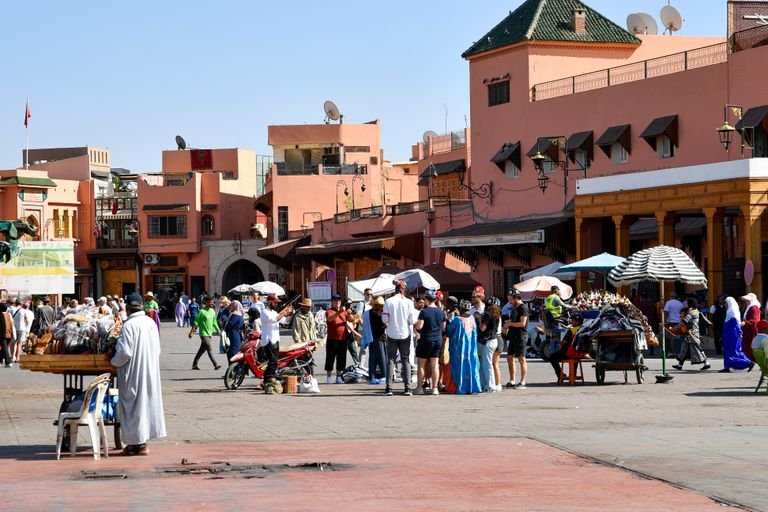
Marrakech and other inland destinations are particularly enjoyable for sightseeing during this period. You can spend the morning exploring a medina, visit palaces and gardens in the afternoon, and enjoy dinner outdoors without the oppressive temperatures that can occur later in summer.
Spring is also a good season for nature and mountain trips. The Atlas Mountains can provide a dramatic contrast between warmer lowlands and cooler high elevations.
Why visit Morocco in spring?
- Comfortable conditions for sightseeing and walking
- Excellent season for combining cities, mountains and desert
- Fresh landscapes and spring vegetation
- Good conditions for road trips and outdoor activities
- Generally more comfortable than the hottest summer months
If you are planning your first trip, spring is an excellent starting point. For example, you can combine Marrakech with the Atlas region and a desert experience, then finish with a few days on the coast.
For inspiration, see our 3-day Marrakesh itinerary and our guide to things to do in Chefchaouen.
Morocco in Summer: June to August
Summer can be a great time to visit Morocco, but your destination matters more than the season itself. Inland cities such as Marrakech can become very hot during the day, while the southern desert is particularly demanding in peak summer.
For travelers who want beaches, surfing, ocean breezes, or cooler mountain environments, summer can be much more attractive. Atlantic destinations such as Agadir, Essaouira and Taghazout benefit from the moderating influence of the ocean.
The Moroccan National Tourist Office notes that coastal areas remain relatively mild and sunny, while temperatures rise considerably farther inland and south. This regional difference is one of the most important things to understand when planning a Moroccan summer holiday.
Why visit Morocco in summer?
- Excellent season for Atlantic beaches and water activities
- Long daylight hours
- Good conditions for high-altitude mountain escapes
- Ideal for travelers who enjoy hot, dry weather
What to avoid in peak summer
If you are sensitive to heat, avoid building an itinerary around long daytime walks in inland cities. Schedule sightseeing early in the morning and later in the afternoon, and allow time for rest during the hottest part of the day.
Morocco in Autumn: September to November
Autumn is arguably the best all-around season for Morocco. September can still feel summery, especially inland, but temperatures generally become more comfortable as October and November arrive.
This is a particularly strong season for a multi-stop itinerary. You can explore imperial cities, take a road trip through mountain landscapes, visit the Sahara, and spend time on the coast without having to design the entire trip around extreme temperatures.
Autumn is also one of the recommended seasons for the Sahara. Cooler conditions make desert excursions and overnight stays considerably more comfortable than during the hottest months.
Why visit Morocco in autumn?
- Excellent weather for city sightseeing
- Very good season for the Sahara Desert
- Comfortable conditions for road trips
- Good balance between inland and coastal destinations
- Warm sea conditions can extend the beach season
Morocco in Winter: December to February
Winter is often underestimated. Morocco does not have one winter climate: coastal cities can remain mild, inland evenings can be cold, and the mountains can receive snow.
For travelers who prefer cooler temperatures, winter can be a very rewarding time for exploring Marrakech, Fes, Rabat and other cultural destinations. The Sahara can also be enjoyable during the day, although nights can become very cold, particularly in desert camps.
Winter is also the season to consider if you want to experience snow in the Atlas or Middle Atlas Mountains. At the same time, coastal destinations can offer much milder conditions than the interior.
Why visit Morocco in winter?
- Comfortable daytime temperatures in many coastal and lower-elevation areas
- Good season for cultural trips and city breaks
- Possibility of snow and winter landscapes in the mountains
- Cooler conditions in the desert during the day
The main drawback is temperature variation. Pack layers rather than assuming Morocco will be warm everywhere.
Best Time to Visit the Sahara Desert
If the Sahara is a major reason for your trip, prioritize spring or autumn. These seasons provide a better balance for desert excursions, camel rides, dune walks and overnight stays.
Day and night temperatures can vary significantly in desert environments. Even during a pleasant season, bring layers for the evening and early morning.
Merzouga is one of Morocco’s best-known gateways to the Sahara, while other desert landscapes offer different experiences. If your trip includes the desert, avoid treating it as a simple day trip: an overnight stay allows you to experience sunset, the night sky and sunrise.
Best Time to Visit Marrakech
For most travelers, March to May and October to November are among the best periods to visit Marrakech. The city is much easier to explore on foot when daytime temperatures are comfortable.
Summer can still work if you plan carefully. Start sightseeing early, take a break during the hottest hours, and return to outdoor attractions later in the day.
If Marrakech is the centerpiece of your itinerary, our Marrakesh 3-day itinerary can help you organize your time around the city’s palaces, souks and historic areas.
Best Time to Visit Chefchaouen and Northern Morocco
Spring and autumn are excellent for exploring northern Morocco, including Chefchaouen and the Rif region. The temperatures are generally favorable for walking, photography and day trips.
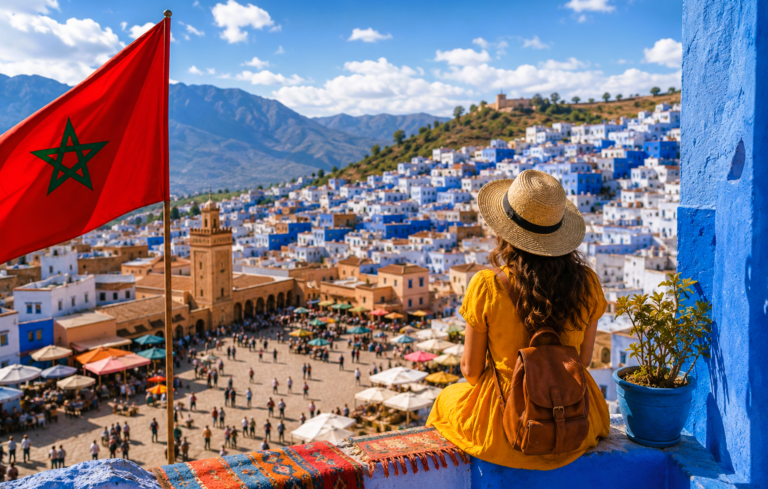
Chefchaouen is especially enjoyable when you can explore its blue-painted streets without the intensity of midsummer heat. Allow enough time to wander beyond the most photographed corners and experience the old town at a slower pace.
Read our detailed Chefchaouen travel guide for ideas on what to see and do.
Best Time for Morocco Beaches and the Atlantic Coast
The Atlantic coast is one of Morocco’s most flexible regions because ocean temperatures and sea breezes moderate the climate. Agadir, Essaouira and Taghazout can work at different times of the year depending on whether your priority is swimming, relaxing, surfing or simply enjoying the coast.
Summer is particularly popular for beach-focused trips, but coastal Morocco can remain appealing outside the peak season. If you want to combine beaches with inland sightseeing, spring and autumn may provide the best compromise.
Best Month to Visit Morocco: Quick Comparison
| Month | Best for | What to expect |
|---|---|---|
| January | City breaks, mountains | Cooler weather; cold nights |
| February | Culture, cities, coast | Mild in many coastal areas; cooler inland |
| March | General touring | Spring conditions begin |
| April | Best overall trips | Mild, comfortable and great for sightseeing |
| May | Road trips, cities, nature | Warm and generally comfortable |
| June | Coast, mountains | Hotter inland; good coastal conditions |
| July | Beach holidays | Hot inland; Atlantic coast more comfortable |
| August | Coast, surfing | Peak summer heat inland |
| September | Coast and touring | Warm, gradually becoming more comfortable |
| October | Best overall trips | Excellent balance for touring |
| November | Culture and desert | Cooler and comfortable in many regions |
| December | City breaks, desert | Cooler days and cold nights |
What Is the Best Time to Visit Morocco for Your Type of Trip?
- First trip to Morocco: April, May or October.
- Sahara Desert: Spring or autumn.
- Marrakech and imperial cities: Spring and autumn.
- Beach holiday: Summer, especially for the Atlantic coast.
- Surfing: The Atlantic coast offers options across much of the year, with conditions varying by location and season.
- Hiking: Spring and autumn are generally the easiest choices for lower and mid-elevation routes; mountain conditions vary with altitude.
- Snow and mountain scenery: Winter is the season to consider.
- Lower crowds and cooler weather: Winter can be attractive, depending on your destination.
How Long Should You Spend in Morocco?
The ideal length depends on how much of the country you want to cover. A short trip can focus on one or two destinations, while a longer itinerary allows you to combine cities, mountains, desert and coast.
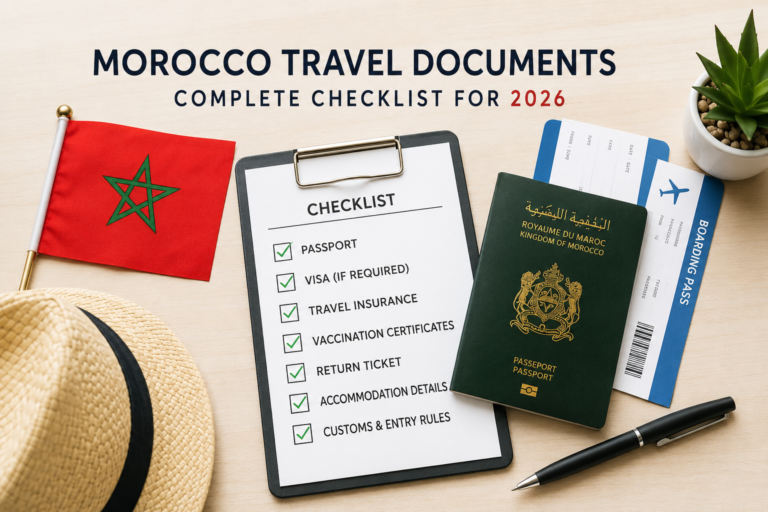
Before booking, make sure your travel documents and entry requirements are in order. Our Morocco travel documents checklist and Morocco travel requirements guide can help you prepare.
Final Verdict: When Should You Visit Morocco?
For most travelers asking what is the best time of year to visit Morocco, the simplest answer is spring or autumn. April, May, October and November are particularly attractive for a first visit because they make it easier to combine Morocco’s major experiences.
However, the “best” season depends on your itinerary. Choose summer if you mainly want the coast, winter if you prefer cooler city breaks or mountain scenery, and spring or autumn if you want to explore as much of Morocco as possible.
The most important lesson is to plan by region rather than by country alone. Morocco’s geography creates very different conditions between the Atlantic coast, inland cities, the Atlas Mountains and the Sahara. Once you match the season to your destinations, it becomes much easier to build a comfortable and memorable trip.
Planning a Morocco trip? Start with our latest travel guides on VMorocco and build your itinerary around the destinations and experiences that matter most to you.